Browser Fingerprinting's Influence on Duplicate Detection in Online Sweepstakes Systems
Ellis Simmons · Oct 10, 2026
Browser Fingerprinting's Influence on Duplicate Detection in Online Sweepstakes Systems
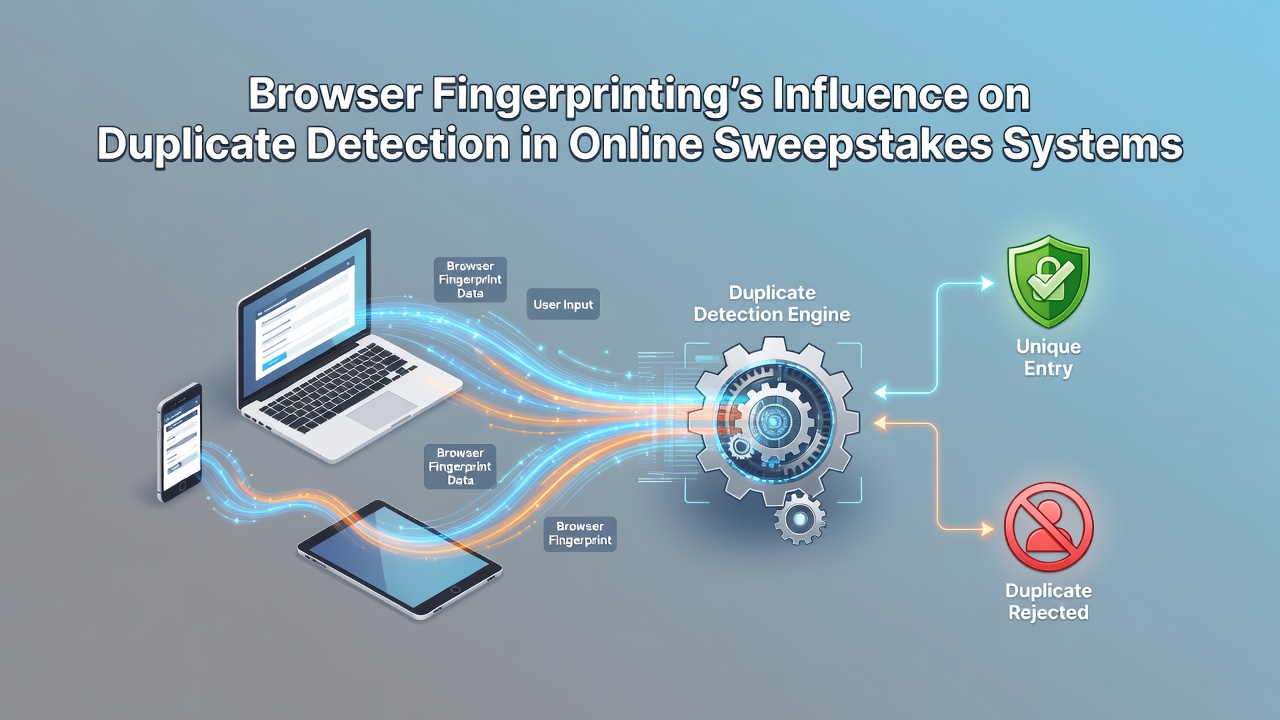
Browser fingerprinting collects dozens of device and browser attributes including screen resolution, installed fonts, canvas rendering outputs, WebGL capabilities, and audio context data to create a unique identifier that persists across sessions even when users clear cookies or switch networks. Sweepstakes operators integrate these signals into entry verification layers so that duplicate submissions from the same physical device trigger automatic rejection before entries reach the prize pool. Data from multiple platforms shows that fingerprinting reduces repeated entries by 40 to 65 percent compared with IP-only or cookie-based checks alone because it accounts for dynamic IP changes and incognito mode usage that older methods miss.
How Fingerprinting Attributes Combine for Identification
Each attribute contributes a small probability of uniqueness yet when combined through algorithms such as those described in academic research the resulting hash reaches 99.5 percent uniqueness in large user populations according to measurements reported by Carnegie Mellon University researchers. Operators log these hashes alongside entry timestamps and contest rules so that systems flag matches within milliseconds and block additional submissions from the same fingerprint profile. In practice the method works silently in the background without requiring users to create accounts or accept persistent storage which keeps entry friction low while maintaining compliance with eligibility rules that limit one entry per person or household.
Integration with Existing Verification Layers
Many platforms layer fingerprint checks on top of server-side validation routines that already examine email domains, phone numbers, and mailing addresses. When a new submission arrives the system first compares the fingerprint against a database of prior entries for that specific sweepstakes then cross-references secondary signals such as geolocation derived from IP ranges and time-zone settings. If the fingerprint matches an earlier entry but the secondary signals differ the entry may still pass under certain contest rules that allow multiple devices within one household yet flag the case for manual review. This hybrid approach became standard after 2023 when several major giveaway platforms reported that single-method systems allowed organized groups to submit hundreds of entries using VPN rotation and browser automation tools.
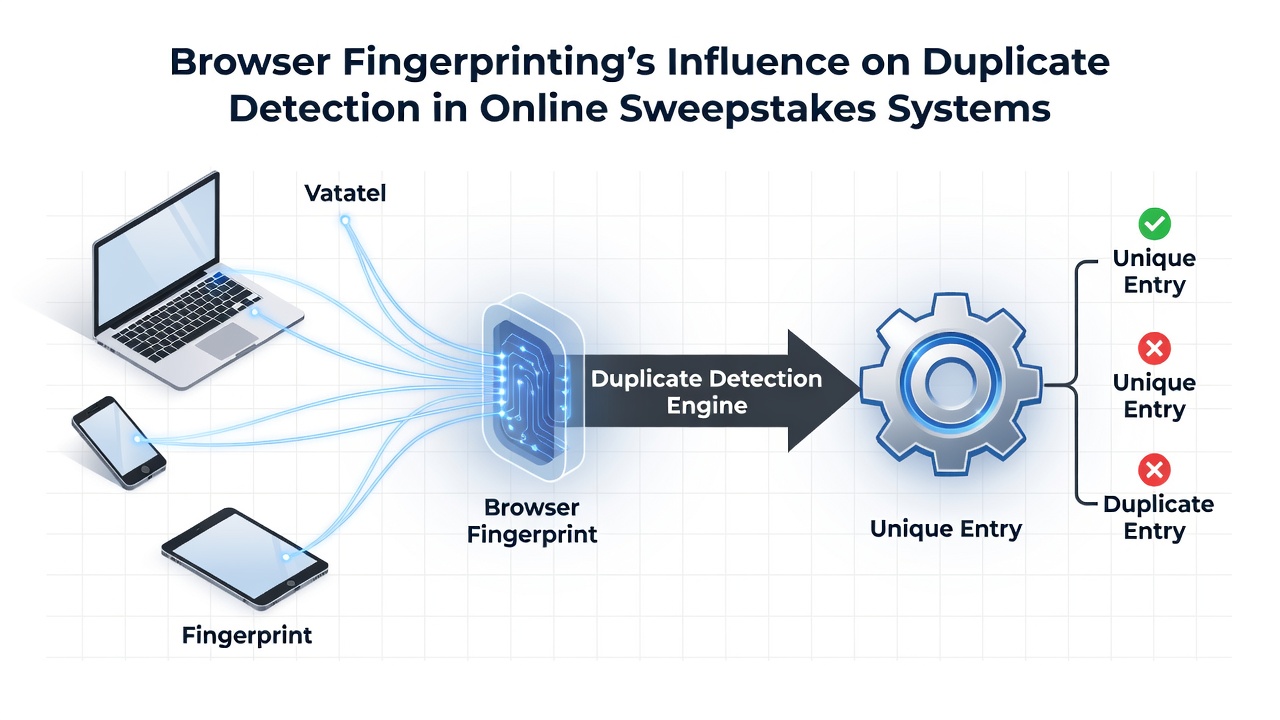
By October 2026 updated fingerprinting libraries began incorporating hardware-level signals from WebGPU and private computation APIs that further distinguish devices even when users employ identical browser versions and operating systems. These enhancements arrived alongside regulatory guidance from the Australian Competition and Consumer Commission that urged clearer disclosure of tracking methods used in promotional contests while still permitting their use for fraud prevention.
Technical Challenges and Evasion Patterns
Participants attempting to bypass detection sometimes alter canvas outputs through browser extensions or randomize font lists yet these modifications often create fingerprints that stand out as artificial because genuine devices produce consistent rendering noise across repeated visits. Observers note that sophisticated automation scripts leave detectable patterns in request timing and JavaScript execution order which platforms combine with fingerprint hashes to build risk scores. When risk scores exceed thresholds entries route to human moderators who apply additional verification such as video calls or document uploads before releasing prizes.
Regulatory and Industry Context
Industry reports from the Interactive Advertising Bureau indicate that fingerprinting adoption in marketing and promotions grew steadily between 2022 and 2025 as third-party cookie deprecation reduced the effectiveness of older tracking techniques. Platforms must balance the accuracy of these methods against privacy expectations outlined in frameworks such as the EU's ePrivacy Directive which requires consent mechanisms for certain non-essential tracking activities. Operators therefore present opt-in language during entry that explains the use of device identification solely for duplicate prevention and not for advertising or data sharing with external parties.
Future Developments Expected After 2026
Continued refinement of privacy-preserving computation techniques may allow platforms to compare fingerprints without storing full attribute sets in centralized databases thereby reducing exposure in the event of a breach. At the same time hardware manufacturers are introducing more consistent APIs that could either strengthen or weaken fingerprint stability depending on how browser vendors implement them. Those who monitor sweepstakes compliance systems expect the next wave of updates to focus on real-time fingerprint evolution tracking so that gradual changes in a user's device configuration do not falsely trigger duplicate flags on legitimate follow-up entries.
Conclusion
Browser fingerprinting now forms a core component of duplicate detection architectures that protect sweepstakes integrity by identifying returning devices across varied network conditions and privacy tools. The technique operates through aggregation of numerous subtle signals rather than any single identifier which produces reliable matches while platforms continue to adjust algorithms in response to both technological shifts and regulatory expectations. As of late 2026 the approach remains effective for maintaining one-entry-per-person limits across global participant pools without introducing noticeable friction for the majority of entrants who use standard browser configurations.