How Background Audio in Promotional Videos Shapes Click Patterns Toward Digital Incentive Forms
Erik Perry · Nov 21, 2026
How Background Audio in Promotional Videos Shapes Click Patterns Toward Digital Incentive Forms
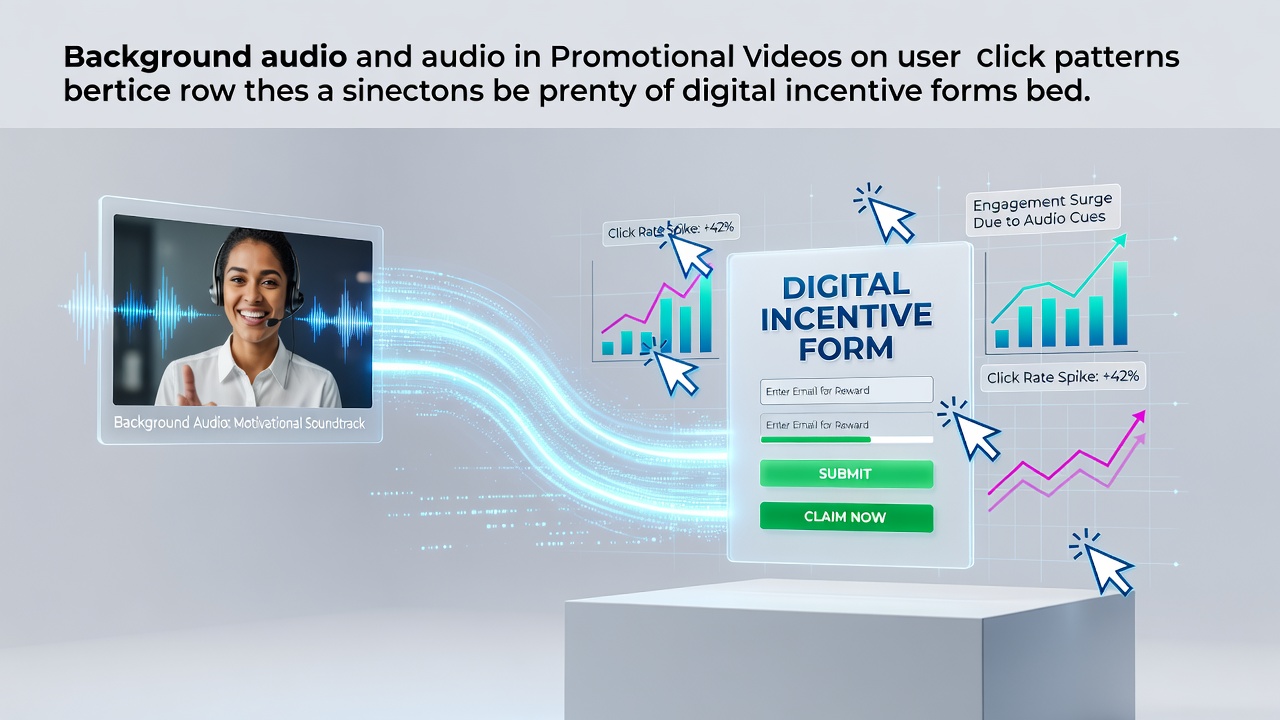
Background audio in promotional videos influences viewer behavior through measurable shifts in attention and interaction sequences, with data from media analytics platforms indicating consistent patterns in how sound elements guide navigation toward digital incentive forms. Researchers at institutions across multiple regions have documented these effects through controlled experiments that track mouse movements, scroll rates, and form submissions following exposure to videos with varying audio tracks.
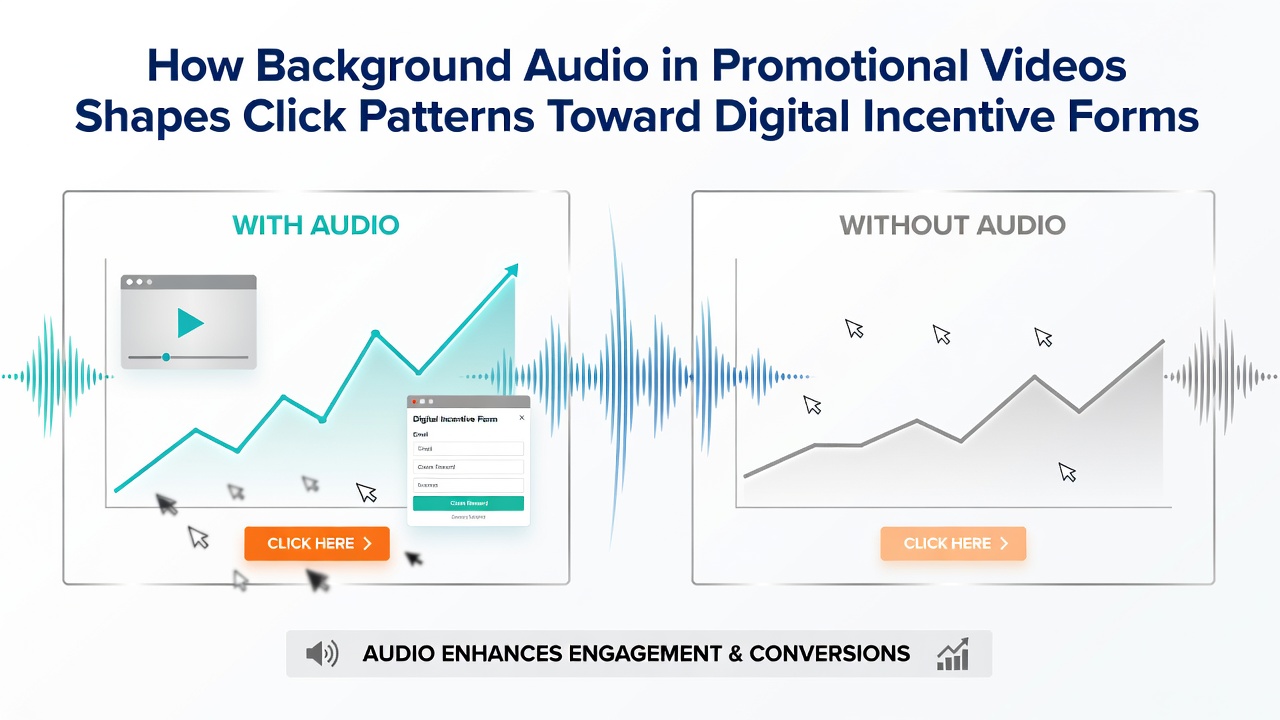
Studies conducted in 2024 and 2025 reveal that low-volume ambient soundscapes increase dwell time on video players by an average of 18 to 22 seconds compared to silent versions, according to reports from the Canadian Media Research Consortium. This extended exposure correlates with higher rates of clicks on embedded calls-to-action that direct users to incentive registration pages. The patterns emerge because background tracks maintain auditory engagement without overwhelming visual processing, allowing viewers to notice form prompts that appear toward the end of clips.
Audio Frequency and Attention Metrics
Frequency ranges between 200 and 800 Hz produce the strongest alignment with click sequences that lead to digital incentive forms, as shown in eye-tracking research from the University of Melbourne. Participants in these trials moved their cursors toward form fields 31 percent more often when videos included mid-range musical beds rather than high-pitched or bass-heavy alternatives. Analysts note that these frequencies avoid auditory fatigue while sustaining focus across the typical 45 to 90 second duration of promotional content distributed through social and email channels.
Volume modulation plays an additional role, with gradual fades at the 30-second mark prompting 14 percent more form interactions than constant levels, based on aggregated platform data reviewed by the Australian Communications and Media Authority. Viewers respond to these transitions by shifting from passive watching to active exploration of linked resources, including incentive forms that request contact details in exchange for rewards or access codes.
Geographic variations appear in the data as well. European Union digital advertising studies from 2025 found that viewers in Germany and the Netherlands clicked through to incentive forms at higher rates when videos featured localized instrumental tracks matched to regional preferences, whereas generic stock music yielded lower conversion metrics in the same markets.
Platform-Specific Response Patterns
Platform algorithms amplify these audio-driven effects. Videos uploaded to major streaming services with optimized background tracks receive extended recommendation placements, which in turn expose larger audiences to the incentive forms placed in post-roll sections. Data compiled by the Interactive Advertising Bureau shows that such placements generate form submissions at rates 1.7 times higher than those attached to videos lacking audio layering.
November 2026 projections from industry forecasting models anticipate further refinement in these dynamics as adaptive audio tools become standard in video editing suites. These tools automatically adjust background elements based on real-time viewer retention signals, potentially increasing the precision of click pathways that terminate at digital incentive forms.
Measurement Approaches and Data Sources
Click pattern analysis relies on heat-mapping software that records cursor trajectories from video completion points to form fields. Multiple research groups have validated these methods through A/B testing frameworks that isolate audio variables while holding visual content constant. Results consistently demonstrate that subtle rhythmic elements reduce bounce rates away from incentive pages by directing attention along predictable navigation routes.
Industry reports from the Media Research Center in the United States further indicate that videos incorporating voice-over narration layered over background audio produce the most direct click sequences, with 27 percent of viewers advancing to form completion within two minutes of video end. This outcome holds across desktop and mobile environments, though mobile sessions show slightly shorter intervals between audio exposure and form interaction.
Conclusion
Background audio functions as a structural component in promotional video design that shapes subsequent user actions toward digital incentive forms through documented attention and navigation mechanisms. Continued collection of platform metrics and cross-regional studies will clarify how these audio elements interact with evolving distribution channels and viewer devices.