Regulatory Hurdles That Define Who Can Participate in Global Award Distributions
Ulrich Long · Nov 7, 2026

Regulatory Hurdles That Define Who Can Participate in Global Award Distributions
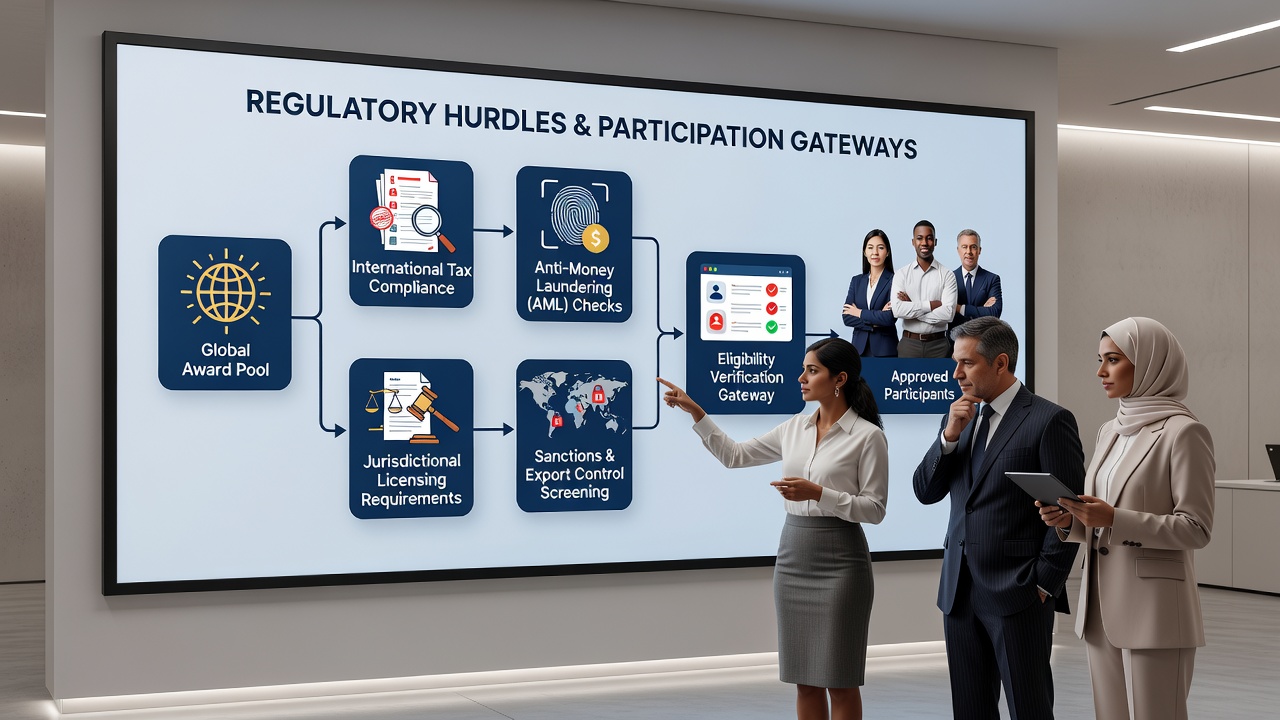
Regulatory frameworks around the world establish strict criteria that determine eligibility for participants in international award distributions, and these rules often intersect across multiple jurisdictions at once. Data from government agencies shows that operators must navigate age thresholds, financial reporting mandates, and sanctions screenings before any prize can reach a winner, while compliance failures trigger automatic disqualifications in many cases. Observers note that these layers of oversight have grown more intricate since the expansion of digital platforms, which now require real-time verification systems tied to official databases in various countries.
Age Verification and Capacity Rules Across Borders
Minimum age requirements vary significantly by region, with most nations setting the threshold at 18 yet others enforcing 21 or even 16 depending on the type of award program involved. Researchers at academic institutions have documented how operators integrate third-party identity checks to confirm participants meet these standards, and any mismatch leads to immediate exclusion from the pool. In practice, those who study entry systems find that automated tools cross-reference government-issued records, which creates additional barriers for younger applicants living in countries with limited digital infrastructure.
Sanctions Lists and Restricted Party Screening
International sanctions regimes maintained by bodies such as the United States Department of the Treasury and the European Union impose prohibitions that block individuals and entities from receiving awards if they appear on designated lists. Evidence indicates that compliance software scans participant data against updated watchlists before any distribution occurs, and this process often occurs in November 2026 when annual regulatory reviews coincide with new designations. One study revealed that organizations conducting these checks reduce their exposure to penalties, yet the added verification step slows processing times and narrows the eligible participant base in affected regions.
Data Protection Obligations and Consent Requirements
Privacy regulations like those enforced under Canada's Personal Information Protection and Electronic Documents Act require explicit consent before personal details can be collected for award eligibility verification. Figures from regulatory filings reveal that programs operating across multiple continents must align with the strictest standard applicable to each user, which means additional disclosures and opt-in mechanisms become standard practice. Those who've examined these protocols note that failure to obtain proper consent results in data being discarded, effectively removing the associated entries from consideration.
Tax Withholding and Reporting Mandates
Many jurisdictions impose automatic tax deductions on prizes above certain values, and operators must file reports with revenue authorities before releasing funds or goods to winners. According to information published by the Australian Taxation Office, cross-border distributions trigger additional forms that confirm residency status and tax obligations in both the source and recipient countries. Data shows these requirements frequently lead to reduced net awards or outright ineligibility when participants cannot provide the necessary documentation within set deadlines.
What's interesting is how financial institutions that facilitate prize transfers also enforce their own compliance layers, which include anti-money laundering checks that align with rules from the Financial Action Task Force. Research indicates that participants in countries without reciprocal information-sharing agreements face higher rejection rates during these reviews, since verification becomes more difficult without standardized records.
Export Controls on Physical and Digital Prizes
Certain award items fall under export control regulations administered by agencies such as the Bureau of Industry and Security in the United States, which restricts shipment of technology or high-value goods to specific destinations. Observers have noted that operators must obtain licenses in advance when prizes include controlled items, and this step alone can disqualify entries from embargoed territories. Evidence suggests that digital prizes sometimes bypass physical shipping rules yet still encounter licensing hurdles when software or content carries intellectual property restrictions tied to national security lists.
Conclusion
Global award distributions operate within a web of overlapping regulations that collectively shape participation by enforcing age limits, sanctions compliance, data consent, tax obligations, and export permissions. Organizations that manage these programs rely on integrated verification platforms to meet requirements from multiple authorities simultaneously, and the process continues to evolve as new rules take effect in regions around the world. Those who track these developments report that successful distributions depend on thorough pre-screening rather than post-entry adjustments.